
How Watts can help with Neighbourly Matters
Our experts will ensure you are fully informed of both your own and your neighbours’ rights to light, identifying potential risks and advising on effective mitigation strategies. We also deliver a comprehensive range of risk assessments and building surveying services, which can be provided concurrently or at key stages throughout your project.
The key areas we look at with neighbourly matters are:
- Third-Party Due Diligence of historic reports
- Party Wall advice
- Boundary Advice
- Crane Oversail and Scaffold Licences
- Rights-of-Way and Easements
- Site hoarding and licencing
- Neighbourly Liaison

Understanding the Importance of Neighbourly Matters
Commercial development and building expansion can inadvertently impact neighbouring properties. With growing pressure to maximise land use, particularly in urban areas, schemes are becoming denser, with taller buildings designed to optimise site value. As a result, party wall agreements, boundary issues, rights to light and other adjoining owner considerations are protected in law. A detailed understanding of these rights and restrictions is therefore essential to minimise risk and support successful project delivery in today’s urban environment.
Risk management
Party wall agreements help manage risks by mitigating potential structural hazards to neighbouring properties before they even happen. Our proactive approach can greatly diminish the chances of damage and related expenses.
Legal compliance
Compliance with the Party Wall Act 1996 is mandatory for numerous construction initiatives that impact adjacent properties or when working in close proximity to site boundaries. Our professional guidance in this area ensures that commercial projects adhere to all pertinent regulations to prevent legal conflicts, penalties, or interruptions in work. They can also assist in maximising development site coverage in many instances and therefore value, by early identification of risk and rights.
Dispute identification and resolution
Conflicts happen, which can cause significant delays in projects, resulting in increased expenses and potentially harming relationships within a community. Our expertise in neighbourly matters allows us to assess potential issues early on, to manage risks that could occur - which helps with the early identification and resolution of potential disputes concerning such matters as rights to light or party wall agreements.
Efficiency
Assessing neighbourly matters and boundaries issues in a phase 1 report, in the project-planning phase, helps prevent delays in building works further down the line. This is because you’ll already have a plan in place to mitigate any potential risks
Protect rights to light
Right to light is a legal requirement in England and Wales. We can help you assess the risks of any such rights that may cause risk and financial uncertainty to ensure your development does not unlawfully infringe on neighbours rights.
Talk to the Neighbourly Matters Services Expert
Watts has a proven track record working across a wide range of building types, including commercial, industrial, retail, residential, public, and historic buildings, tailoring advice to meet the specific needs of each client and their insurers.

Rob Burke
Lead Director
07540 794089 rob.burke@watts.co.ukFrequently asked questions about neighbourly matters and party wall agreements
What are neighbourly matters?
Neighbourly matters refer to a range of issues that arise between property owners and their neighbours when there is a potential for their respective property rights or interests to be affected by things such as construction, renovation, access, oversailing or any other type of development.
In the UK, this includes, but is not limited to, party wall agreements, rights to light, scaffolding and crane oversailing and boundary disputes. Handling these matters carefully is vital to maintain good relations between neighbours and ensure compliance with UK laws to avoid risk of litigation and construction delays and increased costs
What is considered a party wall?
A party wall is a wall or structure that stands on the land of two or more owners. This could be part of a building, a garden wall that spans two properties), or a floor dividing a duplex or flat. It can also be a wall in single ownership, where a neighbour takes structural support of the wall, creating parts of, or sections of a wall that are party under legislation.
Party walls are governed by the Party Wall etc. Act 1996 in England and Wales, which provides a framework for notifying neighbours of intended works, preventing and resolving disputes concerning party walls, boundary walls, and excavations near neighbouring buildings.
What is a party wall used for?
A party wall can serve various purposes, dependent on its location and adjoining structures. It separates buildings owned by different parties and also supports the weight of any part of a building, and facilitates the attachment of two adjoining walls. . The function of party walls, especially in urban areas, is crucial for allowing full site development, defining property boundaries and supporting the structural integrity of buildings built in close proximity to one another.
Can someone stop a neighbour building on a party wall?
You cannot unconditionally stop a neighbour from undertaking construction on a party wall if they follow the legal process outlined in the Party Wall etc. Act 1996. The act is an enabling Act, which allows a building owner to undertake works that without the act, they would find difficulty, legal challenge, in undertaking.
However, they can influence how and when the work is done. The Act provides a framework for peoples right to be protected via notification procedures, express consent or dissent and ensures that any works carried out are reasonable and do not cause unnecessary damage or inconvenience to an adjoining owner.
Can tenants refuse party wall works?
Tenants do not typically have the authority to stop party wall works directly, as the Party Wall etc. Act 1996 deals primarily with property owners. But tenants with more than 12 months legal interest in a property are deemed an owner under the act. In this case they will receive notifications under the act and have their rights protected. However, tenants of less than 12 months should be informed by their landlords about proposed works, and their practical concerns should be considered. The terms of conditions of any tenants’ lease/or licence to occupy should also be reviewed. As express rights and procedures may be contained in any such contract between a landlord and a tenant.
Can neighbours build an extension without a party wall agreement?
If the planned extension involves work on a party wall or falls within the types of works described in the Party Wall etc. Act 1996, then your neighbour must inform you in writing, and you both must either expressly agree to the work or resolve the dispute that arises as outlined by the Act.
If the work takes place wholly on your neighbour's land and does not fall under the definitions of the Act then a party wall agreement may not always be required.
What is the legal right to light in the UK?
In the UK, the legal right to light is an easement that gives a landowner the right to receive natural light through defined apertures (windows or openings) in a building, over the land of another property. If a new development significantly interferes and blocks this light, then an affected property owner may have the legal grounds to object to the development and prevent the obstruction occurring. Ie stop the development or parts of the development that are blocking the light.
What is the 20-year rule for rights to light?
The 20-year rule for rights to light refers to the principle that if a window (or another opening) has received uninterrupted natural light for 20 years or more, it then gains an absolute right to light under the Prescription Act 1832. This means the right to light is established, and any development that unreasonably infringes upon this light could potentially be stopped and asked to be removed under law.
Our Projects

Brodick Castle
Isle of Arran
Following Watts undertaking a condition survey of the Category A listed Brodick Castle located on the Isle of Arran, we were appointed by the National Trust for Scotland to develop a scheme of external fabric repairs to the Castle as identified in the condition survey.
Find out more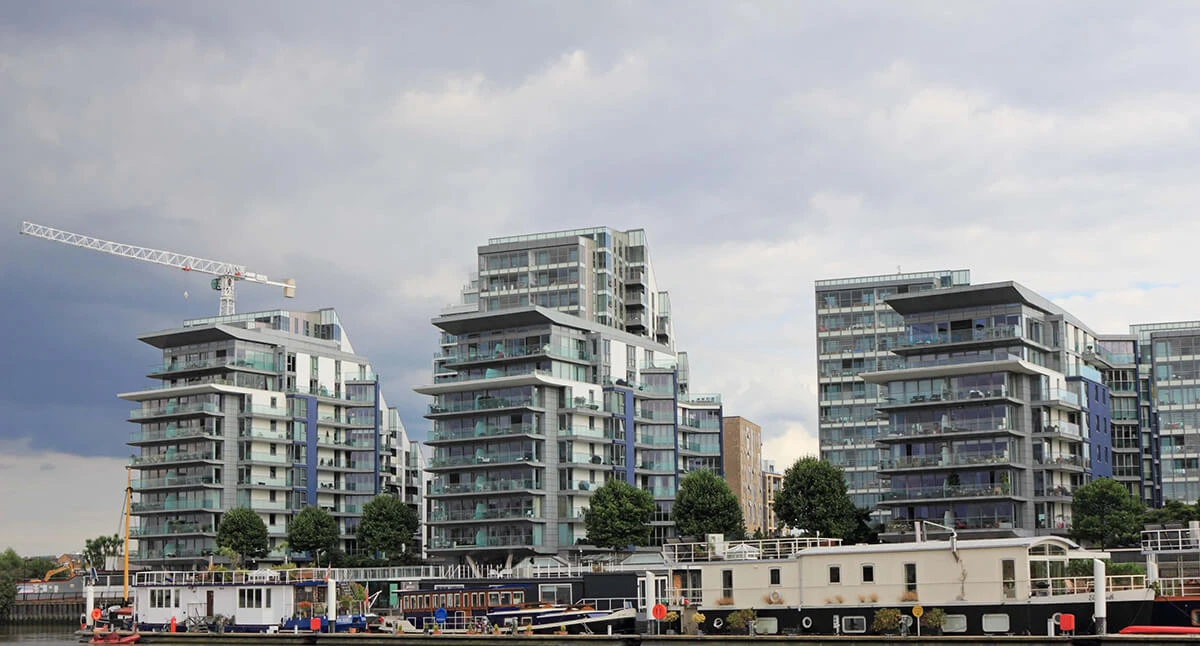
Wandsworth Riverside Quarter
London SW18
Discover how Watts provided expert building surveying and M&E engineering services for Wandsworth Riverside Quarter. Our comprehensive PPM schedules and capital programmes support long-term asset management across nine contemporary residential blocks by the Thames.
Find out more
Glenlivet Estate
Scotland
Crown Estate Scotland is the guardian of significant property and marine assets across Scotland and has a significant role to play in Scotland's economic and environmental landscape.
Find out more